emotional granularity: the power of naming your feelings
the emotional foggy window
imagine you're looking through a window that is completely covered in steam. you can see that there's something on the other side, but you can't tell if it's a person, a tree, or a storm. this is how many of us experience our internal world. we know we feel "something," and usually, we just categorize it as "bad" or "good."
this lack of specificity is more than just a linguistic hurdle; it's a psychological one. when your emotions are a blurry fog, your brain doesn't know how to respond. but when you wipe away the steam—when you achieve emotional granularity—the fog clears, and you can see exactly what you're dealing with.
the "name it to tame it" phenomenon
neuroscience has a beautiful name for the power of labeling feelings: affect labeling. when you experience a strong, negative emotion, your amygdala—the brain's "fire alarm"—is screaming. however, when you find the exact word for that feeling, the prefrontal cortex (the "CEO" of the brain) steps in.
it's as if the prefrontal cortex says to the amygdala, "thank you for the alarm. i see it. it's not just 'danger'; it's 'social anxiety' because of that upcoming presentation." once the feeling is labeled, the amygdala's activity actually decreases. you have moved from being the emotion to observing the emotion.
at squish, we want to help you move from being overwhelmed to being observant. stillness (as explored in our neurobiology of stillness guide) provides the vantage point from which this observation happens.
why "bad" isn't enough
if you tell yourself "i feel bad," your brain has a very limited set of responses: fight, flight, or freeze. but if you identify that you are feeling "lonely," you can call a friend. if you identify that you are "guilty," you can make amends. if you are "overwhelmed," you can set better digital boundaries.
research by lisa feldman barrett, a leading psychologist and author of how emotions are made, suggests that emotions aren't just things that happen to us; they are "predictions" our brains make based on past experiences. by expanding your emotional vocabulary, you are giving your brain better tools to make these predictions—and therefore, better tools to manage your life.
the spectrum of the soul
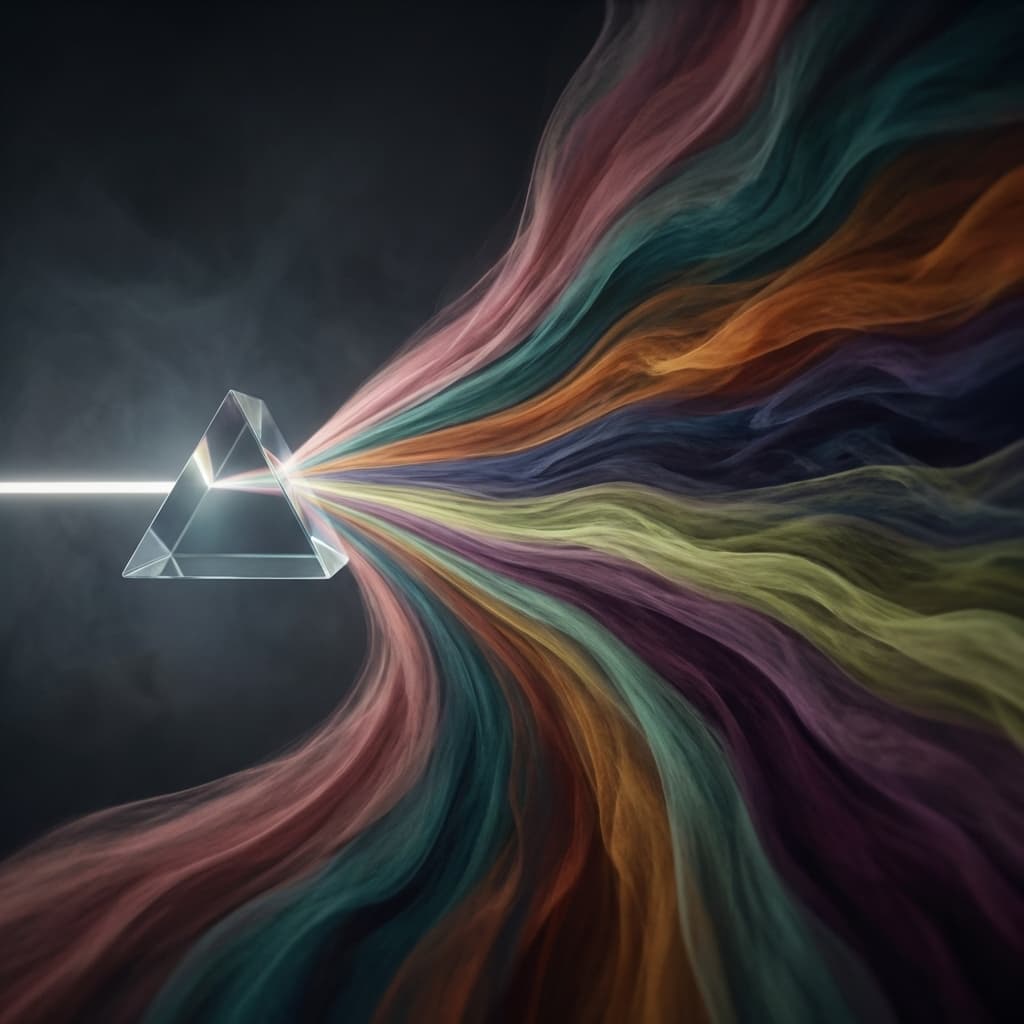
think of your emotional world like a sophisticated color palette $(see our guide on creative expression)$. just as an artist can distinguish between azure, cerulean, and indigo, you can learn to distinguish between the subtle shades of your heart:
- melancholy: a pensive sadness, often with no obvious cause.
- wistfulness: a feeling of vague or regretful longing.
- ennui: a feeling of listlessness and dissatisfaction arising from a lack of occupation or excitement.
- l'appel du vide: the "call of the void"—that strange, momentary urge to jump or do something reckless.
by naming these states, you validate them. they no longer feel like "glitches" in your programming; they feel like part of the rich tapestry of being human.
how to cultivate emotional granularity
building this skill is a gentle process of inquiry:
- the "emotion wheel": keep an emotion wheel nearby. when you feel "bad," look at the wheel and see if you can drill down. are you angry? or are you actually frustrated? or rejected?
- body scanning: emotions often start as physical sensations. is there a tightness in your chest? a heat in your face? a hollowness in your stomach? match the sensation to a word.
- reading and reflection: literature is the greatest archive of human emotion. gentle journaling about what you read can help you "borrow" the granularity of great writers.
- no-judgment zone: don't judge the emotion you find. "envy" is just as valid a data point as "joy." naming it honestly is the only way to move through it.
the gift of clarity
high emotional granularity is one of the strongest predictors of mental health and long-term well-being. it allows you to be the architect of your own experience. you are no longer at the mercy of a blurry, loud internal world; you are a person with a map.
as you navigate your day, try to be specific. don't just "just be" (though we love that, too)—be specifically you.
"the limits of my language mean the limits of my world." — ludwig wittgenstein
deepen your self-awareness
if naming your feelings brings you clarity, you might find profound benefit in our deep dive into the power of silence.
reflections & clarity
what is emotional granularity?
emotional granularity is the ability to identify and label your emotions with precision and specificity. instead of just feeling 'bad,' you might recognize that you are feeling 'disappointed,' 'resentful,' or 'apprehensive.'
how does naming a feeling help regulate it?
the brain's language center (the prefrontal cortex) helps calm the brain's emotional center (the amygdala). when you name an emotion, you are essentially 'tagging' it, which reduces its power to overwhelm you. this is often called 'name it to tame it.'
can i improve my emotional granularity?
yes. like any skill, it can be developed. you can start by using an 'emotion wheel,' reading widely to expand your vocabulary, and practicing mindful check-ins during the day.
what is the link between emotional granularity and mental health?
high emotional granularity is linked to better stress management, lower levels of depression, and a greater ability to choose effective coping strategies. if you know exactly what you're feeling, you can address it more precisely.
is 'bad' still a valid thing to feel?
it's a starting point, but it's not very helpful. 'bad' is like saying you have 'pain' in your body. a doctor needs to know if it's a sharp pain, a dull ache, or a burn to help you. your brain needs the same level of detail to help you navigate your feelings.
does this relate to creative expression?
absolutely. [creative expression](/blogs/creative-expression-self-care) is often a way to find the granularity that words might lack. art allows us to see the colors of our emotions before we can name them.